Snake Bites
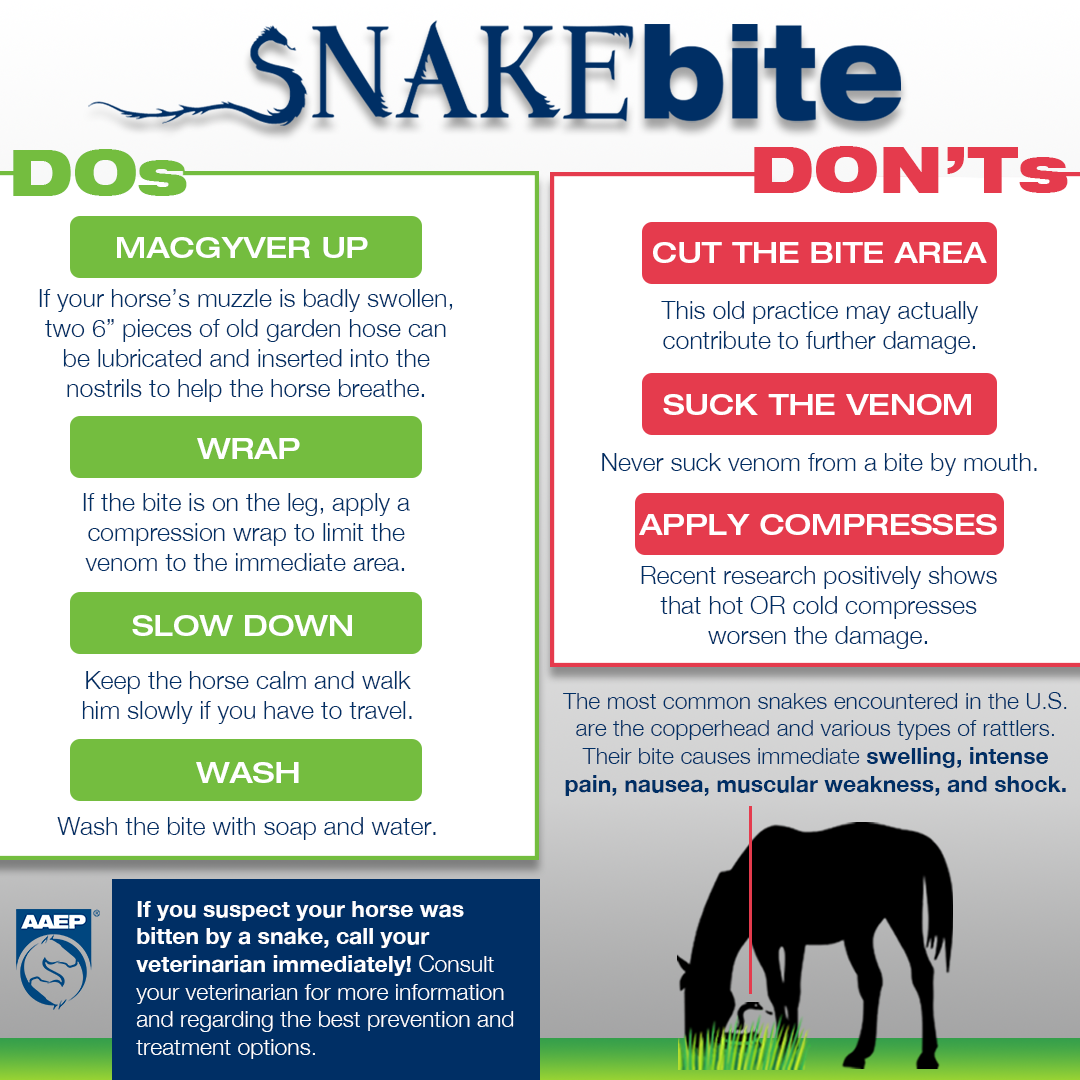
Snakes commonly found in the United States, like copperheads and rattlers, can cause serious injury to a horse. Equines are at the top of the list of sensitivity to snakebites, and are followed in order by sheep, cows, goats, dogs, pigs, and cats. Horses almost always get bitten on the muzzle, and the spread of the venom containing enzymes, peptides and neurotoxins can be fatal. The resultant swelling can be so extreme that the nostrils almost close and breathing can become difficult or impossible. Shock is the most common problem following snakebites and prompt treatment is necessary. If you know or suspect that your horse has been bitten by a snake, call your veterinarian immediately. Better to have a false alarm than to play catch-up later in a crisis situation. Talk to your horse doctor about the likelihood of snake attacks in your area and seek guidance regarding the best preventative and treatment options. Related resources: "Snakebit!," written by Dr. Kenneth L. Marcella: https://aaep.org/issue/snakebit Snakebite vaccine guidelines: https://aaep.org/.../risk-based-vaccination.../snake-bite