
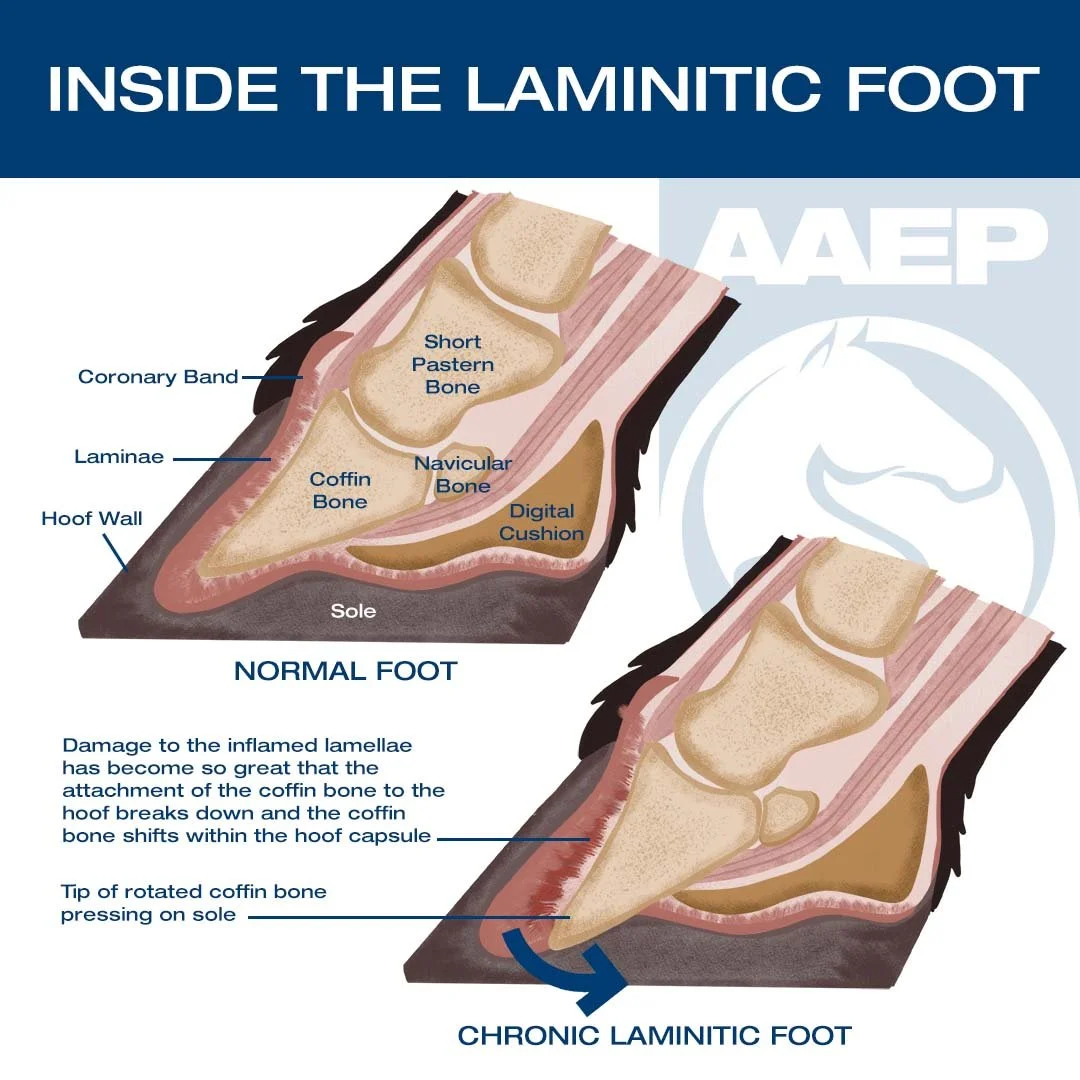
Signs of Laminits
Although laminitis occurs in the feet, the underlying cause is often a disturbance elsewhere in the horse’s body. As a horse owner, it is important to recognize the signs of laminitis and seek veterinary help immediately.
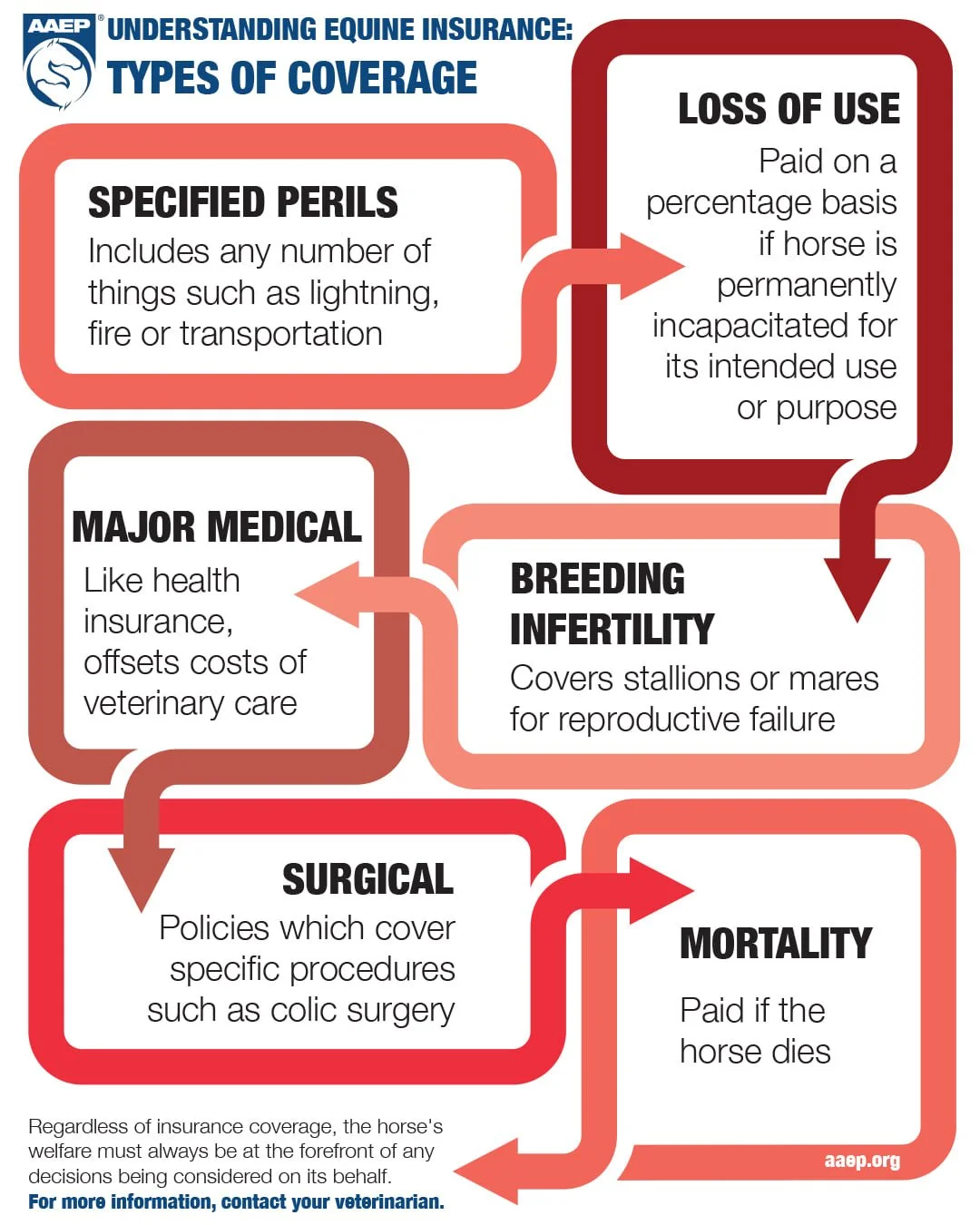
Equine Insurance
Whether a horse is purchased for personal or business reasons, ownership represents a significant investment of time, money and resources. While no one likes to think about the potential for tragedy, horses seem to be prone to illness, accidents and injury. Should some peril befall your horse, nothing may ease the emotional burden, but wise planning can help reduce the economic impact.
To better safeguard yourself and your horse, follow these guidelines from the AAEP.


10 Tips for Preventing Colic
Many of the conditions that cause colic can become life threatening in a relatively short period of time. Only by quickly and accurately recognizing colic — and promptly seeking qualified veterinary help — can the chance for recovery be maximized.
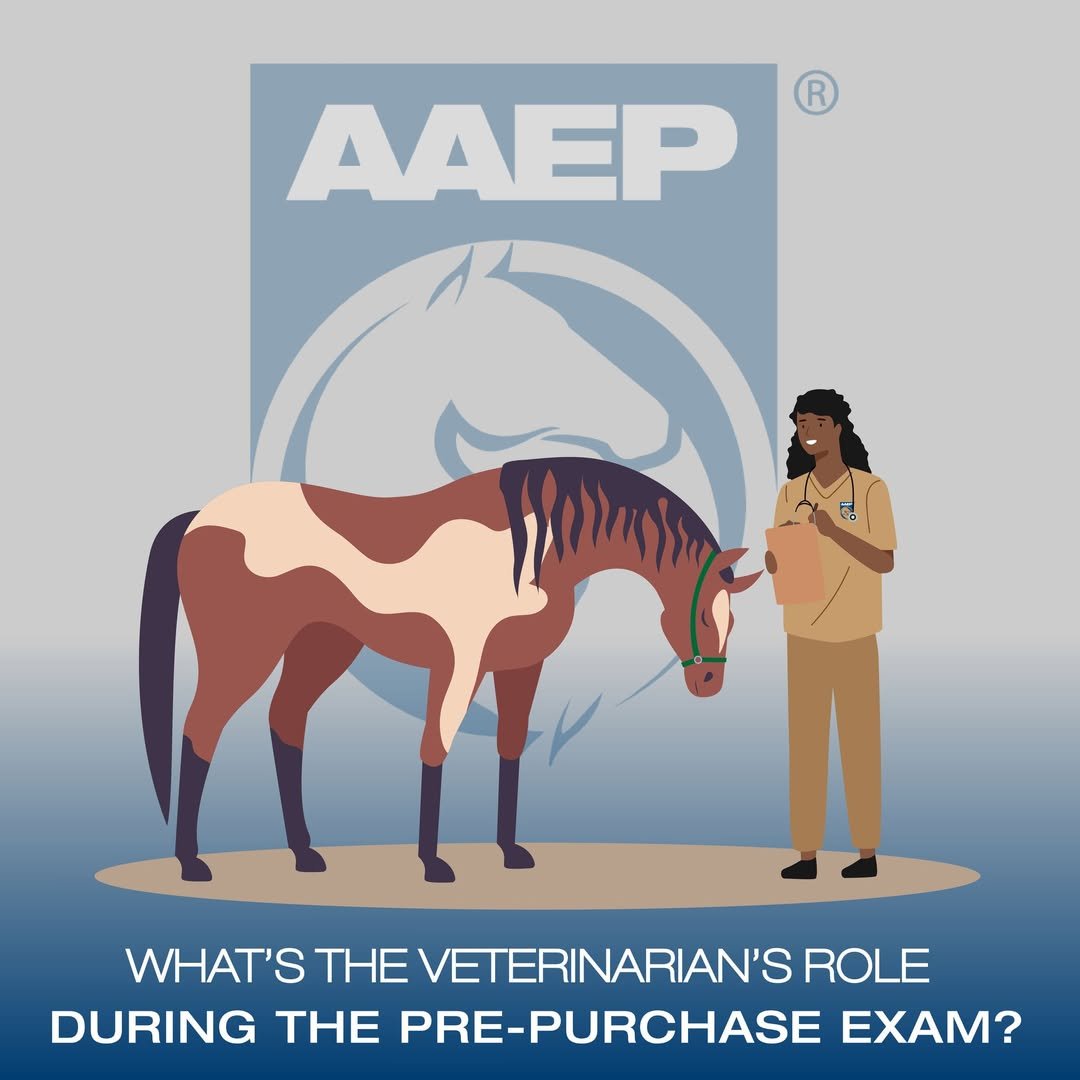
Pre-purchase Exam (PPE)
Owning a horse is a big investment in terms of money, time and emotion. This is why it’s important to investigate a prospective horse’s overall health and condition through a pre-purchase examination (PPE) conducted by an equine veterinarian.
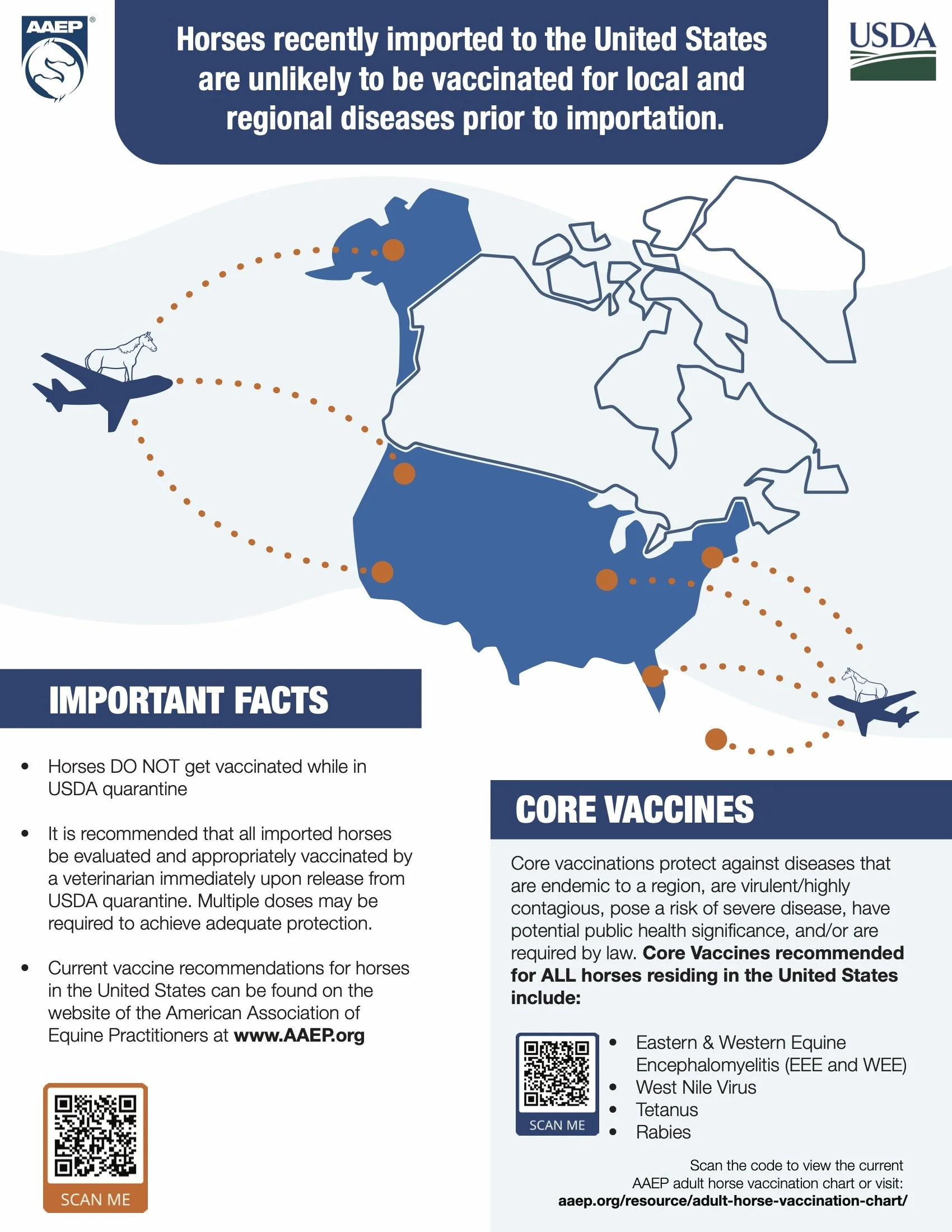
Vaccination - Import Horses
Horses recently imported to the United States are unlikely to be vaccinated for local and regional diseases prior to importation.
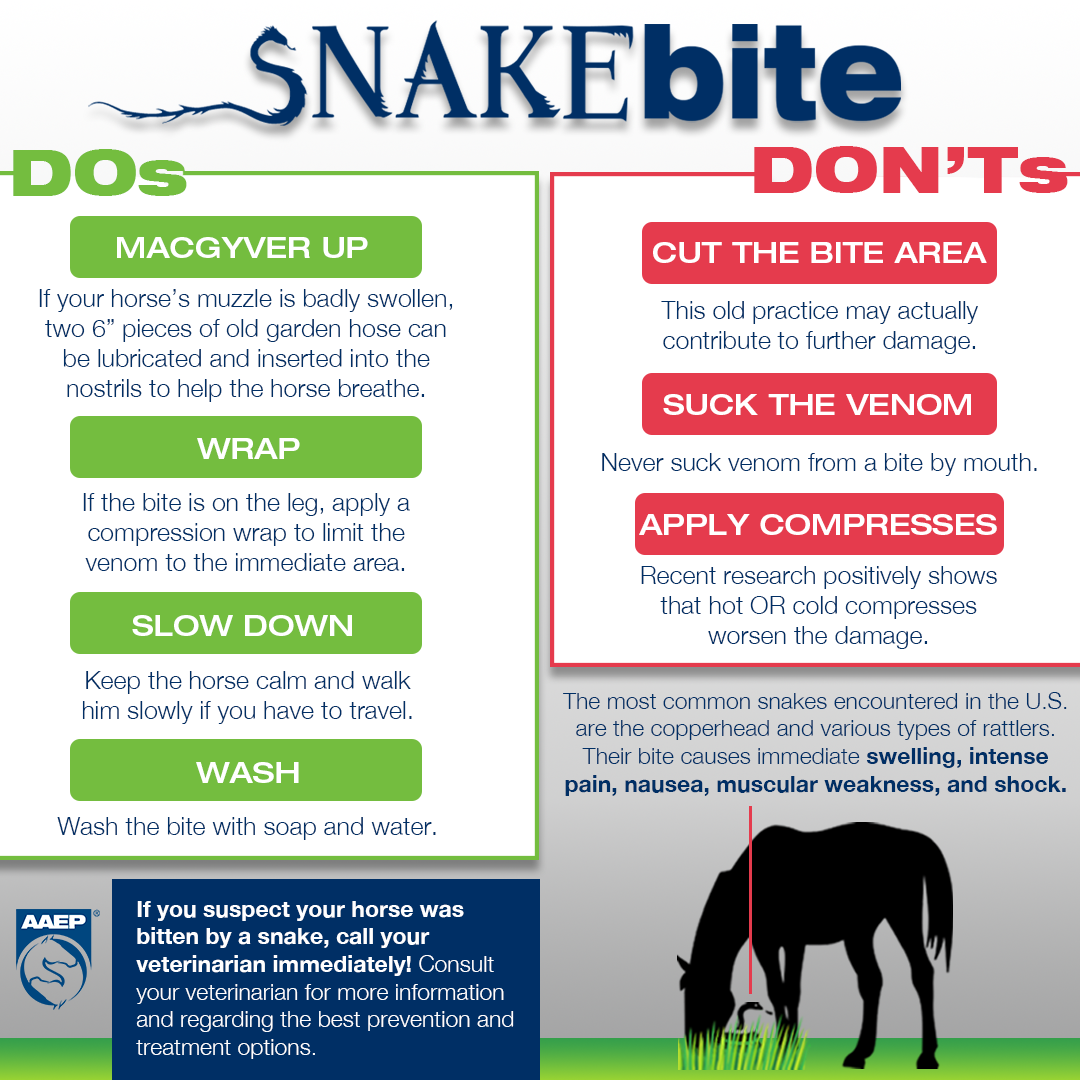
Snake Bites
Talk to your horse doctor about the likelihood of snake attacks in your area and seek guidance regarding the best preventative and treatment options.
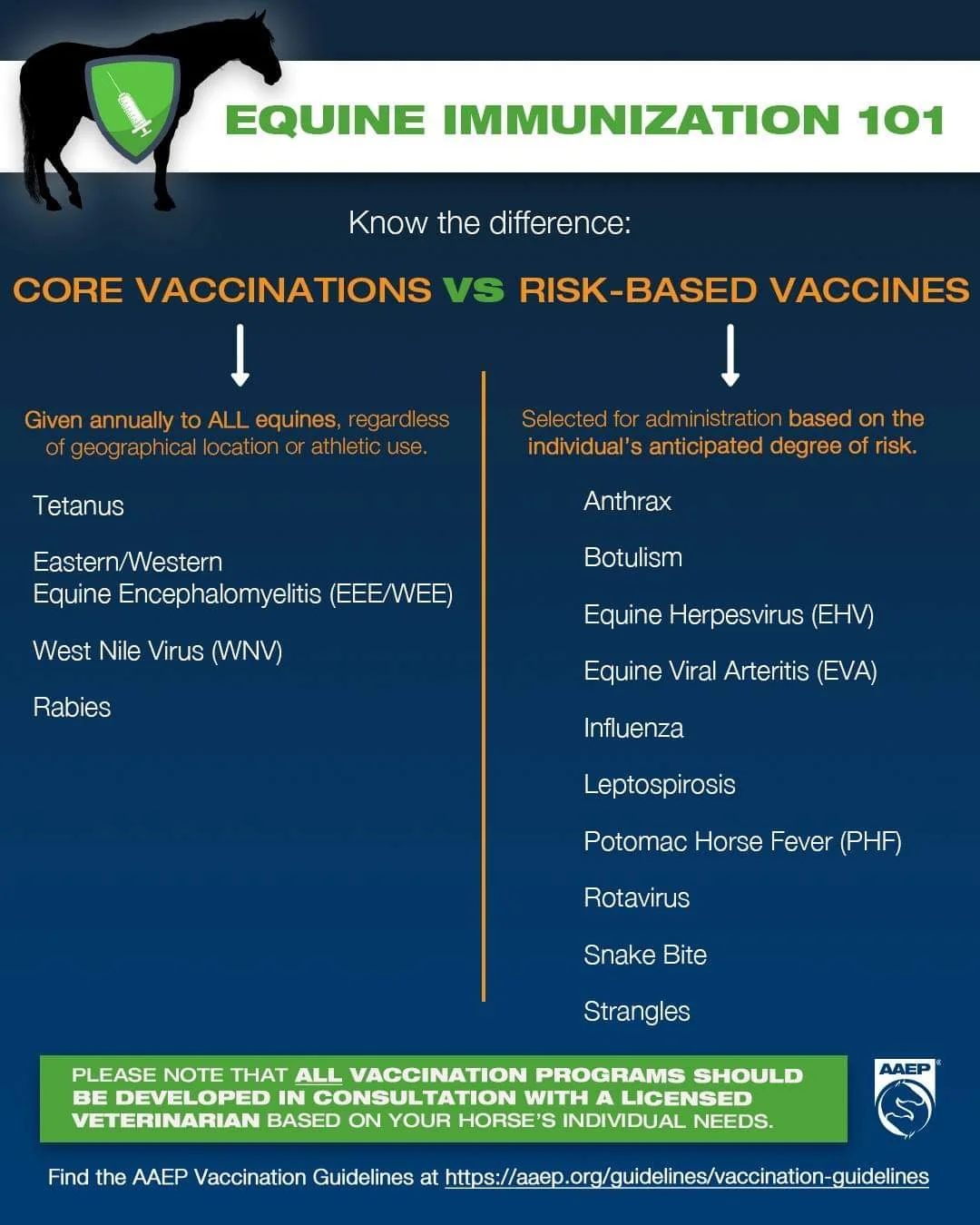
Core vs Risk Based Vaccines
All vaccination programs should be developed in consultation with a licensed veterinarian.